Featured

Table of Contents
While we are familiar with the tax arrangements of the issues presented herein, as Financial Advisors of RJFS, we are not qualified to render advice on tax or legal matters. You should go over tax or legal matters with the suitable specialist. **TSP: The Thrift Savings Strategy (TSP) is a retirement savings and financial investment plan for Federal employees and members of the uniformed services, consisting of the Ready Reserve.
The Federal Retirement Thrift Financial Investment Board (FRTIB) administers the TSP. IRAs: Contributions to a standard IRA might be tax-deductible depending upon the taxpayer's income, tax-filing status, and other factors. Withdrawal of pre-tax contributions and/or profits will be subject to normal earnings tax and, if taken prior to age 59 1/2, may be subject to a 10% federal tax charge.
In addition, with a Roth individual retirement account, your allowable contribution might be reduced or gotten rid of if your annual income exceeds specific limits. Contributions to a Roth IRA are never tax deductible, but if specific conditions are satisfied, circulations will be completely income tax free. Roth IRA owners should be 59 or older and have actually held the individual retirement account for 5 years before tax-free withdrawals are permitted.
In addition, each transformed amount may be subject to its own five-year holding duration. Transforming a conventional IRA into a Roth IRA has tax ramifications. Financiers need to consult a tax advisor before deciding to do a conversion.
Start by evaluating your spending plan for the year. Compare actual costs to your planned budget and see where you have overspent or underspent. This helps determine spending patterns and areas where you can cut down or reallocate funds for the next year. Evaluate your bank and charge card declarations for the previous year.
Reliable Methods to Repair Your Credit in 2026
Change your budget plan classifications to reflect changes in your lifestyle or monetary objectives. Contributing the maximum quantity to your retirement accounts can offer substantial tax benefits and help protect your financial future.
1Consult with a monetary professional to determine the best retirement method. Make sure that your property allowance aligns with your risk tolerance and financial objectives.
Tax planning is an essential part of year-end monetary planning. Evaluation your tax circumstance and take steps to lessen your tax liability.
Top Methods for Future Money Planning
Talk to a tax expert to explore tax-saving chances and tax-efficient financial investment strategies. Regularly reviewing your credit report is necessary for maintaining a healthy credit rating and recognizing prospective mistakes or deceitful activity. Get a free copy of your report from each of the three significant credit bureaus (Equifax, Experian and TransUnion) and evaluate them carefully.
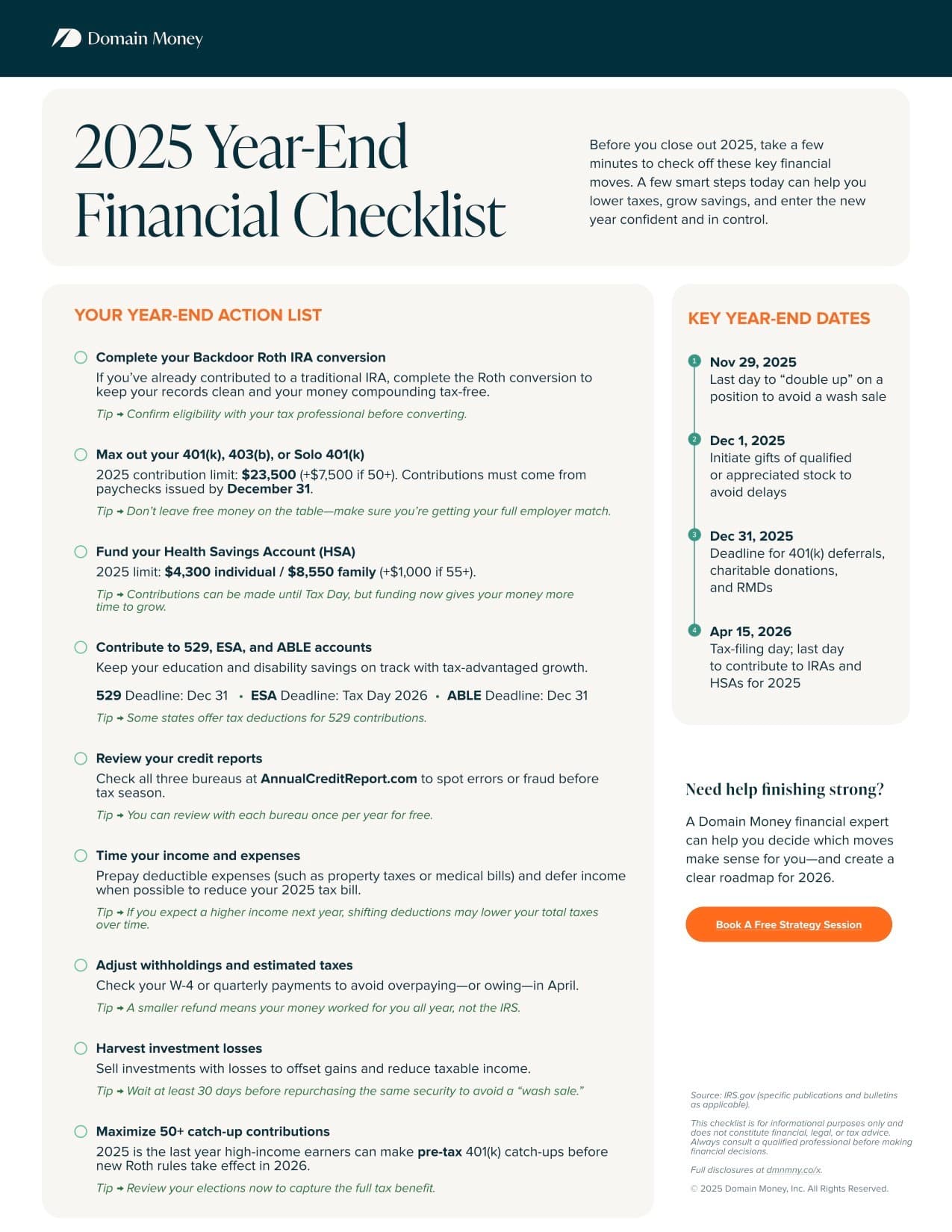
Challenge any errors with the credit bureau. Think about credit tracking services for ongoing defense. As you examine your financial resources, require time to upgrade your monetary objectives. Assess your achievements over the past year and set brand-new goals for the year ahead. Set specific, measurable, attainable, relevant and time-bound (WISE) goals.
Review and change your goals occasionally throughout the year. Update your coverage as needed to reflect any changes in your individual or financial scenario.
Essential Steps for Financial Success in 2026
Think about bundling policies for potential discounts. It's necessary to regularly examine and upgrade your recipient classifications on your monetary accounts and insurance coverage policies. Life changes, such as marital relationship, divorce, birth of a kid, or the death of a loved one can impact your intended beneficiaries. Making sure your designations are existing assists prevent possible conflicts or legal problems in the future.
Confirm that your recipient classifications line up with your present dreams and estate strategy. Update your designations as required, bearing in mind any changes in your individual or monetary scenarios. If you have a Flexible Investing Account (FSA) or Health Savings Account (HSA), keep in mind to utilize your qualified dollars before they expire.
Review eligible costs to take full advantage of benefits. Schedule any upcoming doctor gos to, dental checkups, or medical procedures. Purchase qualified health services or products, such as prescription spectacles, contact lenses, or non-prescription medications. Keep all invoices and paperwork for tax purposes. An emergency situation fund is important for monetary stability. Objective to have three to 6 months' worth of living costs saved in an easily accessible account.
Save any windfalls, such as tax refunds or benefits. Start saving for these expenses now to assist avoid monetary pressure later on.
Major Benefits of Consolidating Debt With Expert Help
Set up automated contributions to these accounts. Think about seeking advice from with a financial professional who can assist you develop a comprehensive and extensive financial strategy. Look for a Certified Monetary Coordinator or a fiduciary advisor.
By following this year-end monetary list, you can work towards a thriving and economically protect new year. Take the time to evaluate and adjust your finances, and don't be reluctant to look for professional recommendations to ensure you are on the best track.
A financial strategy is a structure for directing earnings, spending, financial obligation, and savings. A clear plan lowers unpredictability and supports decision-making throughout the year.
Simple Steps to Raise Your Credit Score FastUnderstanding Expert Credit Counseling Services in 2026
A complete standard determines where pressure exists and where adjustments are possible. 2. Define Priorities Identify the primary monetary goals for the year. Common concerns include emergency cost savings, debt reduction, retirement contributions, necessary purchases, and future preparation requirements. Limit the list to a small number of targets so that earnings is designated with function.
Different fixed commitments from flexible spending. Appoint a particular total up to savings and financial obligation repayment. This minimizes the influence of unpredictable spending patterns, which the Customer Expense Study has actually documented across U.S. families. Automated transfers increase consistency. Set recurring transfers for savings, retirement contributions, and necessary sinking funds. Automation avoids delays and minimizes reliance on discretionary discipline.

Irregular expenditures create monetary instability when not planned in advance. Designate monthly contributions to a sinking fund for items such as insurance premiums, property taxes, vehicle upkeep, medical needs, and annual subscriptions.

Latest Posts

Rebuilding Your Credit Score with Proven Steps
Repairing Damaged Credit Ratings Quickly for 2026

Ways Mobile Tools Can Boost Financial Health